Sunday, April 02, 2017

My Impressions of RPGs I've Played

A Penny For My Thoughts

GM-less (GM plays as a player), Dice-less, uses pennies and slips of paper. Theater of the Mind.

Players are amnesiacs trying to regain their memories in an asylum. A great one-shot pickup game.


All Flesh Must Be Eaten

GM-required, roll 1d10 + skill level to succeed, point buy skill progression.

A zombie survival game. Always had fun playing this game.


Apocalypse World

GM-required, roll 2d6 + stat to succeed, character templates with individual moves, point buy skill progression.

A cool post-apocalyptic Road Warrior game designed more for one-shots or several sessions, not a system built for a long campaign.


Bureau 13: Stalking the Night Fantastic

GM-required, roll 1d100 below or equal to skill level to succeed. Point buy character creation, leveling up based on experience points adds hit points and more skill points.

A tongue-in-cheek and deadly serious version of investigative horror. The equipment and bad guys are humorous and deadly. Tennis shoes with C-4 explosive inside, James Bond-like vehicles, and an innovative hit location and damage chart that is almost like an anatomical overlay where you trace a bullet through skin, bones, and internal organs.
Chivalry and Sorcery, 1st ed

GM-required, roll 1d100 below or equal to skill to succeed. Lots of charts that mimic Medieval European feudal society. Apparently there's a 4th edition.

Used to play this in high school. I only remembered that after you spend half an hour rolling up your character, you then see if you die in childbirth with something like a 25% chance (which I can't find in the book, so maybe it was a terribly twisted house rule?).


Call of Cthulhu, 7th ed

GM-required, roll 1d100 below or equal to skill to succeed, point buy character creation, progression is achieved by keeping track of skill successes and at end of session, make one skill check, if fail, add 1d10 skill points to that skill.

Investigative horror in various eras, but the base game is set in 1920s. Currently my favorite game.


Conan by Modipius

GM-required, roll 2d20 each die gives a success if you roll equal or below a Target Number, additional success if you roll equal or below your focus skill number, so you can get up to 4 successes rolling two dice. Point buy character system. Character progression is through point buys.

Combat heavy game with mechanics borrowed from modern RPGs such as Fortune points, Doom points, combat Effects, Momentum. Fortune points can be spent for character progression or for an extra 1d20 which is automatically a 1. Interesting and enjoyable system.


Cthulhu Dark

GM-required, roll 1d6, 2d6, or 3d6 but take the max.

Investigative horror mostly applied to modern era.  Rules light, great for one-shots.


Cypher System, Numenera, The Strange

GM-required, roll 1d20 above or equal to Target Number. Pick from menus character creation. Character progression is through point buys.

GM doesn't roll dice. Characters roll attack and defense dice. Characters are handed Cyphers, one use items and assets that reduce difficulty levels. Characters spend Effort (Might, Speed, Intellect) to reduce difficulty levels. XPs can be spent for character progression or a dice re-roll. As a GM (actually in general), I like rolling dice.


Delta Green

GM-required, roll 1d100 below or equal to skill to succeed, point buy character creation. Character progression is through a skill test at end of a session on skills that critically succeeded (uses old CoC 6th edition rules).

Modern era Call of Cthulhu with conspiracy theories and a burn it all down attitude. There's a new edition (2016) that didn't license the new CoC 7th edition rules which has some nice new rules on character Bonds.
Deadlands, 1st ed

GM-required, roll multiple dice take max, use poker cards and chips. Character templates.

Thematically very cool, Indians and cowboys, undead things and strange creatures, and ghost rock.


Don't Rest Your Head

GM-required, handfuls of d6 (two colors).

Playing in a dream powered world where you gain power as you buy into the dreamworld and go crazy. Great one-shot game.

I just wonder how many times can you go through the roleplaying of first not believing in the dreamworld and then finally coming to grips with it. It may wear thin, but I love the various dark entities that rule the dreamworld. Worth exploring.

Dragon Age

GM-required, roll 3d6 (2 dice are the same color, 1 is different), Character templates and character progression by leveling up.

This game is based on the video game. I liked the use of the Dragon Die (the one different colored die) as a stunt die. If you get any type of pair, you get stunt points to spend equal to what's on the Dragon Die.

That said, the game seemed like it was based on combat. The video game is mostly combat with character choices and dialog, so this RPG does mirror that. There are stunt points for social interactions and magic casting also.

Dread

GM-required. Dice-less, Uses a Jenga tower.

The physical tension of collapsing a Jenga tower mimics the story arc of a horror game. Shear genius. One of my favorite one-shot systems.

Can be applied to any setting, but mostly used in modern era.


Dungeons & Dragons, 1st ed, AD&D, 3.5, 4.0, 5.0

GM-required, roll 1d20 equal to or above a target number to succeed. Character templates. Character progression is through leveling up, generally by killing things and taking their stuff.

Mostly Tolkien-esque fantasy role playing.

I used to play this a lot when I was younger. My issues are with the philosophy behind the game. You get better by killing things and taking their stuff to increase your hit points and increasing the damage you do. To get to higher levels, you must kill stronger things to gain the experience points you need to get to the next level. This leads to min/maxing your character and promotes killing things as the way to solve issues. When you have a hammer, everything can be solved by pounding it into the ground. This one dimensional way of playing is now boring to me. I like talking to creatures and solving problems in more creative ways.

D&D 3.5 got really complicated and had issues getting new customers who were new to the hobby, and the publisher decided to rewrite the game system and make it more like a video game and created D&D 4.0. By that time, they had open sourced D&D 3.5, so Pathfinder was born as an extension to D&D 3.5 which people sometimes call D&D 3.75. D&D 4.0 failed in the market place by alienating its existing customer base, so D&D 5.0 was created which basically ditched D&D 4.0 and returned to its D&D 3.5 roots and upgraded it. I hear D&D 5.0 is doing well in the market place. And so is Pathfinder.

Empire of the Petal Throne

GM-required, roll 1d20 above a target number to succeed. Character templates. Character progression is through leveling up.

Tolkien invented Middle Earth and M.A.R. Barker invented Tekumel, a Meso-American world.

It's a metal poor world, so it's mainly obsidian weapons. I love the world, but it was created soon after D&D 1.0 and suffers from the same kill things philosophy, but the social issues and restraints add a nice cultural flavor to the game.


Exhalted

GM-required, roll lots of d10s equal to trait plus attribute (sometimes 20d10), each 7+ on a die roll is a success, total number of successes for effects. Character templates with build trees.

Very anime superhero level of combat. Lots of skills and combos to use. If I didn't have a pre-gen to play, I would have been lost.


Fading Suns

GM-required, roll 1d20 above a target number to succeed. Character roles plus point buys.

Sci Fi gaming. A lot of interesting world building with high tech and feudal societies mixed in.


Fate

GM-required, roll special Fate dice which result in +1, 0, -1, positive total for success. Characters are free form and have aspects which can be tapped.

Can be used for any setting. I've played in some very good Fate games, but on average the dice will just roll 0, so how people play the game is have the supporting characters add advantages and when it's the hero's turn, the hero will tap all the advantages to do the killing blow. Who the "hero" is can rotate between characters based on their specialty or trait. So, my issue is mainly with the system that on average rolls 0, so why bother rolling?

Feng Shui 2

GM-required, roll 2d6 of different colors, one is negative the other positive and you add it to your skill. Character templates. Progression is through point buys.

Modern era Kung Fu and John Woo gun fights. Lots of Asian cinema action. Lots of Theater of the Mind as you have to create your action scene by using whatever may be present - which you may have to make up on the spot.


Fiasco

GM-less, roll d6s (pile of two colors of dice, half positive, half negative), 4d6 per player is put into the pool. Theater of the Mind. Requires pre-printed play sets.

Mostly modern era depending on the play set. An easy one-shot pickup game, but requires imagination from the players and a sense of dark humor as the game's inspiration are Coen Brother movies where bad luck and horrible situations ensue.


Final Girl

GM-less, Dice-less, uses playing cards. Theater of the Mind and characters are based on their relationships with each other and a simple tagline.

Can be any era as long as there's a reason why people are dying. A great one-shot game. As you play, various characters are killed off until one is left. You get to play any character you want in each scene, so you can rotate between characters, when a character dies, you are not out of the game, you just have to pick a surviving character in the next scene. Requires imagination and a love for slasher movies.

Godlike

GM-required, roll up to 10d10 per player and more d10s for the GM. Successes are based on matches rolled. Point buy character creation. Progression is through point buys.

WW2 superhero game where the superhero has only one ability and can easily get shot in the head. Uses the amazing ORE system (One Roll Engine). Very brutal and deadly game with lots of crunch and uses only one die roll to determine initiative, action result, hit location, damage.

Great game, but really hard to run a campaign. Characters died before I could finish their character arcs. And remember, you should always wear a helmet, a beret looks cool, but it won't save your life.

Grimm

GM-required, roll 1d6 to match skill level to succeed. Character templates. Progression is through point buys.

You're playing kids in a twisted version of Grimm's Fairy Tales. Very imaginative world. I love the world and game.


GURPS

GM-required, roll 2d6 below or equal to skill to succeed, modifiers affect your skill. Point buy character creation. Progression is through point buys.

GURPS stands for Generic Universal Role Playing System, so it can be used for any setting, any era, but you must buy separate setting books unless you want to make everything up yourself.

I rarely play this anymore.

Hollow Earth Expedition, HEX

GM-required, roll number of d6 equal to skill and each die that equals or beats the difficulty level is a success. Character templates with point buys. Character advancement through point buys.

1936 pulp adventure into the Hollow Earth with dinosaurs, natives, and Nazis. Loads of pulp action fun a la Raiders of the Lost Ark.
James Bond

GM-required, roll 1d100 below or equal to a target number to succeed. Point buy character generation. Progression is through point buys.

You're playing a secret agent. And I loved the supplements such as the QManual. There were some innovative things in the system such as wound levels. I have a number of published scenarios, but never really got to run it.
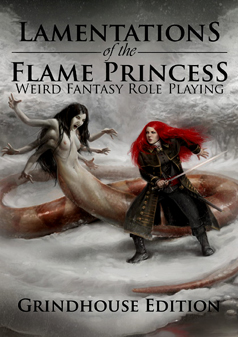


Lamentations of the Flame Princess

GM-required, roll 1d20 equal or above target number to succeed. Character templates. Character progression is through leveling up.

This is a stripped down version of D&D, no feats, no cantrips, etc. More rules than D&D 1.0 and less rules than AD&D.

I enjoyed the game I played in because the min/max options have been removed.


Legend of Five Rings

GM-required, roll multiple d10s and keep several, totaling the ones kept. Success is if the total reaches a target number. Character is generated with point buys. Character advancement through point buys also.

The setting is based on the collectible card game. It's an ersatz Japanese medieval setting with a taint from the Shadowlands that poisons the area with undead and monsters. Hmm, sounds like a familiar trope. I do like this game more than Exhalted.

Little Fears

GM-required, roll multiple d6s, pick best 3 and add them together. Point buy character generation. Progression is through point buys.

Modern era. You're kids dealing with parent issues, school, and monsters.


Monsterhearts

GM-required, roll 2d6 + stat to succeed, character templates with individual moves, point buy skill progression. Uses the Apocalypse World engine.

Modern era teenagers in high school who are monsters: vampires, werewolves, witches, vampire hunters, Frankenstein monster, fae. It's an interesting game, but I found it creepy. Part of the game are "sex" moves where you gain advantages over other PCs and NPCs by exploiting your sexuality. Too much high school drama and PCs trying to have sex with each other. Not my type of game.

Monster of the Week

GM-required, roll 2d6 + stat to succeed, character templates with individual moves, point buy skill progression. Uses the Apocalypse World engine.

Modern era adult monster mash. Similar in concept to Monsterhearts except there are no sex moves. Sort of like the League of Extraordinary Gentlemen. System works for a one-shot or a short series of scenarios.


The Mountain Witch

GM-required, roll 1d6, the higher number the better. Quick character generation for one-shot. There is no character progression.

Players are ronin in medieval Japan sent to solve a mystery. This is a one-shot game. There is no replay-ability I really enjoyed this game as it is more about a character's relationship with others and the rigid culture.
Nemesis

GM-required, roll up to 10d10 per player and more d10s for the GM. Successes are based on matches rolled. Point buy character creation. Progression is through point buys.

This is the horror version of ORE. Freely available by the publisher here.


Night Witches

GM-required, roll 2d6 + stat to succeed, character templates with individual moves, point buy skill progression, system based on Apocalypse World engine.

You're playing USSR female bomber pilots during WW2. You're flying old biplanes. I found playing interesting especially with the card add-ons with pictures of the female pilots and their planes. Not sure about replay-ability, but an interesting game. Beware, there is adult content in this game as it relates to death and possibly homosexuality.

Paranoia

GM-required, roll dice and die, rules? I'm afraid that is above your security clearance citizen, please enter the suicide booth to your left. The good news is you have clones to try again.

A very fun and funny game, filled with puns, joke items, and random death.


Pendragon

GM-required, roll 1d20 equal or below skill to succeed. All characters are knights and are generated with point buys. Character progression is during the winter phase through point buys and some through failing at skill rolls.

Set in King Arthur's world. A very different game where your character is your noble house and your knights grow up and die, mostly in battle.

I'm playing in The Great Pendragon Campaign and after about 1/2 way through, I think it's getting a bit repetitive.

Shadowrun

GM-required, roll multiple d6s, the higher the total the better. Character templates with skill point purchases.

Future urban fantasy with computers and guns, and dwarves and trolls, and magic. Most of the games are capers where Shadowrunners need technology and magic to steal something. The only drawback is that people playing hackers are usually left out of the action.


Savage Worlds

GM-required, roll type of dice based on your skill, 4+ is a success. If opposed roll, high wins. Dice explode if max is rolled. Point buy character generation and point buy upgrades dice type. e.g. Smarts 1d6. You can spend points to upgrade your Smarts to 1d8.

Generic system. Combat is an opposed roll, so combat can be very swingy and unpredictable.
Space 1889

GM-required, roll 1d6 or multiple d6s and compare against a target number. Point buy character generation.

Victorian steampunk setting. I love the setting, but the system sucks. I tried one combat and it became an unending fistfight. I recommend keeping the world, but replacing the system with something else.


Star Wars, 1st ed, West End Games

GM-required, multiple d6s, system sucked and yes, Storm Troopers can't hit anything with their dice pool, but heroes can.

The main attraction were the licensed source books with official pictures and drawings from the movies.

The Fantasy Flight Games version is much better, but requires custom dice.


Star Wars, Fantasy Flight Games

GM-required, roll dice pool and add up special symbols on the special dice. Point buy character generation and point buy character progression.

The Star Wars system. Very Star Wars and very fun. People buy a dice rolling app instead of buying the expensive special dice that's required to play the game.

Tenra Bansho Zero

GM-requred, multiple d6s each die's value that is equal or above a specific skill level succeeds. Total all the successes. Character templates and point buys. Character progression is built into the system.

Crazy anime samurai sci-fi epic one-shot game. The game is designed to play in one sitting of about 4 hours and end in an epic battle. The characters ramp up so much in the session, they cannot be used again. A character may start with 10d6 and at the end of the game have 50d6 in an attack. A very innovative system. One of the more interesting innovations is the emotion matrix of how a PC will react when they first meet an NPC or other PC.

The One Ring

GM-required, special dice are needed. Character templates with customization. Character advancement is through point buys.

Playing in J.R.R. Tolkien's Middle Earth. No strange Monster Manual that's a combination of all of history's mythological creatures. This is pure Middle Earth.

I disliked the use of special dice and the game seemed to be really focused on travelling from A to B and having some adventures along the way. Very Tolkien, but a bit dull for me, a non-Tolkien fanatic.

TimeWatch

GM-required, roll 1d6 + modifiers, generally 4 or better suceeds. Character generation through point buys, character advancement is through point buys. Uses the GumShoe system.

Playing in all times and all places. You are part of TimeWatch an elite team that fixes history. This game is loads of fun and full of real history.


Trail of Cthulhu

GM-required, roll 1d6 + modifiers, generally 4 or better succeeds. Character generation through point buys, character advancement is through point buys. Uses the GumShoe system.

Investigative horror set in the 1930s. I like the Call of Cthulhu system more, but I will run Trail of Cthulhu scenarios since IMHO they seem to be written better. My favorite campaign is Eternal Lies.

I would also check out their One-2-One system for one GM and one player, available in Cthulhu Confidential.

Traveller, 1st ed

GM-required, it's been so long, I don't remember how the system worked. I just remember we built space ships, traveled, avoided pirates, and traded goods. Felt like a board game.


Trudvang

GM-required, roll 1d20 below or equal to skill level. Point buy character creation. Character advancement is through point buys.

Fantasy RPG based on Norse and Celtic myths and sagas. Think Beowulf. Beautiful artwork, interesting religions and magic system. Combat system is a bit crunchy. Minor annoying typos in rules translated from Swedish. My gaming group didn't enjoy the system.
Unhallowed Metropolis

GM-required, rolls 2d10 + skill modifiers to succeed, generally 11 or better succeeds.  Character templates and point spends.

Victorian steampunk with poisonous smog and undead rising in London. I love the setting, but some builds are overpowered and are killing machines, so there's some balance issues with the character types.


Unknown Armies, 2nd ed

GM-required, roll 1d100 below or equal to your skill level to succeed. Characters are created with point buys.

Modern era, urban fantasy. There are people who can use Magick, they draw power from items of historical significance like the dress Marilyn Monroe wore when she sang Happy Birthday to JFK. With that power, depending on the Magick, they can increase their attractiveness, or manipulate the President.

Really cool world and system. Innovative use of Madness Meters and Hardening against such madness.

Vampire

GM-required, roll multiple d10s, 8 are successes, total number of successes. Point buy for character generation and progression. System uses World of Darkness system.

Modern era. You play vampires who live forever until someone kills you, but then you might still rise again. So, what do immortals do? They gather power, grow older, gain power, and jockey with each other for more power. A game of uber-backstabbing.


Warhammer Fantasy, 2nd ed

GM-required, roll 1d100 below or equal to skill level to succeed. Characters are randomly generated and get a random career. Every 100 experience points can increase a skill by 5%, once you've maxed out a career, you move on to your next career.

Medieval fantasy. It's a fight against Chaos which in the future turns into Warhammer 40k. Some interesting concepts such as careers and descriptive critical hits. But it is still generally a kill things and take their stuff type of game, but more gritty.

3rd ed added special dice and cards to keep track of abilities and spells. It basically turned a pen-and-paper RPG into a table top game with expensive components.

World of Darkness

GM-required, roll multiple d10s, 8 are successes, total number of successes. Point buy for character generation and progression.

Modern era horror. Instead of being vampires, werewolves, fae, or ghosts, you're just a mortal and supernatural creatures wind up hunting you.

Sunday, March 26, 2017

My Favorite RPGs and Why I Don't Play D&D Anymore

During High School, my brother introduced me to D&D, the white box version. And I introduced it to my friends and we played our own homegrown highly modified games until college. So, I GMed for about 10 years. Most of those games were dungeon crawls. My games matured from random roll up charts and encounters to more theme-based dungeons, but they were all still dungeon crawls. Characters did evolve from the "character funnel" (start with 1st level characters and see who survives) to I let you make anything up as long as you have a good enough backstory. Then I stopped playing as college and work (real life) interposed itself. Fast forward 10 years, I attended a local gaming convention and signed up for my very first LARP and had a great time. That group of Vampire LARPers used the convention game as a way to find good players for their table top RPGs. They mainly ran a homegrown version of GURPS. From them I learned a totally different gaming style, a story based game vs min/max kill things and taking their stuff game. I think I've been playing and running this new style of game for almost 20 years.


As an experiment, I decided to run the Freeport Trilogy using D&D 3.5. I had bought the D&D 3.5 books and they sat on my shelf for over 10 years. I had an idea for an Epic Level Campaign, but I could never get my LARPer friends interested in it. So I was excited to run a game of pirates and an award winning campaign.

What could go wrong? I found that a co-worker and his partner were looking for a D&D game, so I invited them to my gaming group to fill seats. They were D&D game lawyers and my co-worker created a reasonable character and from play, I could tell he was more interested in character interactions and story, but his partner was a min/maxer and had created a Half-Orc Barbarian tank.

I found the clue trails in Freeport a bit weak and some clues were only available on the bodies of assassins sent to kill the PCs. A bit on the weak-sauce there. Yeah, lets send an assassin and the assassin would have incriminating evidence on them pointing to who hired them. What type of hit man would do that?

The Freeport Trilogy had various excuses for combat and I was happy to have the min/maxed Barbarian in the game. He killed everything in one or two hits, so combat mercifully ended quickly.

So, I learned that D&D wasn't my game anymore.

I tried D&D 4.0, 5.0 and Warhammer Fantasy 3.0. Didn't like any of them. I liked Warhammer Fantasy 2.0 better. Warhammer Fantasy 3.0 seemed like it was trying to sell special dice and cards that were game aids and tried to replicate a video game experience (just like D&D 4.0).

p.s. I'm currently playing in D&D 5e, The Curse of Strahd. I'm really enjoying the game, so never say never. My vote is for leveling milestones instead of experience points and limiting the amount of combat.


So what do I like to GM or play (in alphabetical order)?


A Penny For My Thoughts

A mostly GM-less game. The GM acts as a player. Diceless.

My favorite pickup game. You only need a few slips of paper and some tokens like pennies. The players are amnesiacs trying to recover their memories in an asylum. The story unfolds with the help of the other inmates.

I dislike some of the ritualistic aspects of the game, so I drop that when I run it. Here's a link to an article I have written about it and Dread.


Call of Cthulhu 7.0 Edition

Investigating clue trails, history, and a game where combat will get you killed. Lots to love in CoC. Amazing amount of published scenarios and support material.

The game is in the horror genre, based on the Cthulhu Mythos created by HP Lovecraft and added to by other contemporaries and modern authors. One of the best TV shows to tap into this was the first season of True Detective.


Don't Rest Your Head

Players enter a very imaginative dream world when they fall asleep. As they learn to manipulate the dream world, they lose their grasp on reality.

I've never run this as I've only played in it to explore the nightmare landscape. I'm a bit intimidated about running it as dice management requires a deft touch for the GM.

Dread

This is great for a horror game. The Jenga tower completely matches the ups and downs of horror.

Here's a link to an article I have written about it and A Penny for My Thoughts.


Feng Shui 2

Lots of Kung Fu madness. Great for John Woo and Jackie Chan fans.

Settings are white rooms where players get to use whatever elements they can dream up (that makes sense) to help in their over-the-top combat scenes.


Fiasco 

I'm a fan of Coen brothers movies and Guy Ritchie's movies: Lock, Stock and Two Smoking Barrels; Snatch; and Revolver. And Pulp Fiction.

This is a GM-less game. The GM acts as a player.

Another great pickup game, but you need to have various playbooks already printed in order to play.

Game is best with people who are comfortable making up stories and character situations on the fly. Also a sense of dark humor is required.


Godlike 2

WWII with soldiers with super powers, but they can still get shot in the head. Gritty and deadly. One of the best simulations of chaotic combat available.

This game requires 10d10 for each player and handfuls of d10s for the GM. Lots of crunch, but it uses ORE (One Roll Engine) which uses one die roll to determine initiative, action result, hit location, damage.

When I run this at a convention, I always have on hand lots of backup characters because you never know when a Nazi gets lucky and shoots a PC in the head.

TimeWatch

Time travel and fixing history. Lots of fun and thinking out of the box. An investigative game where you keep on travelling back in time to find the pebble that got dropped in the time stream (or the butterfly who flapped its wings).

Here's a link to an article I wrote about TimeWatch.


Wednesday, March 22, 2017

Conan (Monolith boardgame 2016) - Painted Miniatures


Finally painted all the miniatures from the Conan boardgame.


Painted Furniture
Various painted animals

Various painted Demons (and a camel)
Various painted Conans

Painted skeletons
Painted mummies

Unpainted minis for comparison

Unpainted minis for comparison
For painting techniques: How to Paint Plastic Zomies

Wednesday, March 15, 2017

What Makes a Great RPG Session?


I've run and played in a lot of games as you can tell by looking through my blog posts. Those are only my convention games and they don't include my regular weekly games.

So, what makes a Great Game Session?

Great games for me were games that flowed well, that was fun and exciting, and the players brought their brand of crazy to the table that made everything memorable, games that I remember fondly many years later.

I've discussed this with Shannon M. and we came to the conclusion that it was a combination of 50% GM and 50% Players. A great GM could have bad players and bring the game down a notch. A bad GM could have great players bring the game up a notch or even save a horrible game.

So a great gaming session is a combination of a great GM with great Players at the table.

What makes a Great GM?

Preparation

The GM needs to know the rules. Or enough to fake it, but if you fake it and have a player that's a rules lawyer, it'll kill the table. Ezra D. won the title of Big Bad GM one year and he was vaguely familiar with Fate, the system used in the contest. Luckily, no players rules lawyered him.

The GM needs to know his or her scenario. You don't have to memorize everything, but you need to know the flow and why things are where they are. If you do, then you can move things around on the fly and not interrupt the flow. If things are going wrong, you can always call for a break. And while everyone else is going to the bathroom or getting a snack, you can go over your notes and figure out what to do.

If you don't have a good memory, then a short one page outline that you can reference would be very useful. You can also use different colored highlighters to color code various things (an old college note taking trick).

Flexibility to say, "Yes," and Improvise

If you understand your scenario, you would understand what would break it and how to weave changes into it. A game is a collaborative process. If the GM is the producer of a play providing the scenery (world system. e.g. 1920's CoC), the set (smoke filled speakeasy), the lighting (gritty and non-pulpy), the spear carriers (NPCs, bar employees and drunks), and the conflict (the drama and instigating action. e.g. a nun gets chased into the group of PCs by cultists), the Players are the improv actors providing the dialog and action and emotional content.

So, if a Player wants to do something that's reasonable, within the PCs abilities and doesn't break the world's rules, I'd let the PC try the action even if it was totally out of the box (unexpected, not covered by the scenario if a published scenario or you if you wrote the scenario). It is up to the GM to provide the target numbers and to determine the side-effect of failure. If the action is interesting enough, the GM can allow a success, even on a failed die roll, but add a setback or condition due to the bad die roll. e.g. PC wants to swing across the room on a chandelier and kick a bad guy into a pit. Instead of just failing, and not even being able to swing across the room, the GM can ask the Player, "Do you want to succeed with a setback?" If the answer is, "Yes," then the PC could succeed, but the bad guy grabs onto the PC's leg and now the PC is hanging off the edge of the pit and the bad guy is clinging to the PC's leg.

If you understand your scenario, you can move scenes around without damaging the pacing or flow. I was in a game run by Mike Mason and when the party broke up into 3 groups, he gave each group something to do, even the group that went to the library to do research (which generally is a die roll and a snore-fest). It was a published scenario and after the game, I read the scenario and found out that Mike cut-and-pasted various scenes, giving each group a scene even though they hadn't followed the required clue trails. It was masterfully done.

Pacing

Give players things to do. And try to even out each player's screen time. This is more important at a convention as you want everyone to have a good time. At a home game, you get to understand how much screen time each player actually wants. For long homebrew campaigns, one trick I use is to make each session or short scenario about one PC, so the focus is on that PC only for that session, but the focus over various sessions rotates through all the players. I ran a Ghost in the Shell game and each mission was tied to a different PC. I got this idea by watching Star Trek. There were Spock episodes, Kirk episodes, and Bones episodes, etc. So, why not have game episodes based on a specific PC? Rotate for fairness.

When a group breaks off to do research, it generally is just a die roll and then they wind up sitting and waiting as the other group goes and investigates a haunted location or follows a bad guy. The screen time becomes uneven. Unless the library group just wants to sit back and be safe, you can add some urgency by giving them some critical information or as Mike Mason did, make the adventure come to them. Have some bad guys lay a trap or follow them in the library. If I were an evil cultist, I would have someone watch for people researching ways to kill my cult.

I got some training from various schools of fiction. So, I'm a fan of a cycle of rising tension, periods of calm, and more rising tension going towards a climax. It's good to take a pulse of how the players are reacting, whether they are engaged or being bored.

Sense of Drama

If you have a good sense of the current pacing and the current tension level, you can then crank up the tension level, but how do you do that? You'll need a good sense of drama.

If the PCs are going to face the big bad, are they worried? Or do they think it's a piece of cake? If they're worried, maybe you don't need to do anything else. If piece of cake, maybe add some doubt. Do they have the right ritual? Do they know how to perform it? Are their ingredients correct? Are they being followed? Is the big bad mocking them? What do they not know? How do you signal this to the PCs? Have them notice they're being spied upon or attack them in their place of safety by some assassins (natural or supernatural). This will generally force the PCs to act sooner than later. They can't turtle up if their places of safety are compromised.

If the PCs are on the run, you want to make it more desperate, more hopeless. Why not add complications. Have someone be hurt, possibly from a side-effect of combat. Or give them some innocents that need to be saved. Do they take them with them? Or let them die? Are resources like ammo or food running out?

If the PCs are reluctant to face the climax, how do you make them invested in the climax? The best games give the PCs a stake in the outcome. If they don't face the big bad, something horrible will happen. In CoC, it's generally the end of the world, but that is too generic. But if the big bad starts affecting them or their loved ones in subtle ways first, and as the scenario progresses, they realize it's getting worse, then that'll get their attention. Threat to them and their loved ones always gets their attention. Eternal Lies does this beautifully by attacking the PCs sources of stability and pillars of sanity throughout the campaign (my favorite Cthulhu campaign). Not only do the PCs face danger, but between scenarios, their loved ones are affected either subtly or attacked directly, so they must return and face the danger. "Once more unto the breach, dear friends, once more."

Understanding Human Nature

If the GM understands human nature, the GM can use that as examples during a game. When a PC makes a notice roll or a psychology roll, I love to give telling details about an NPC. It's great when the player understands what tell I'm giving them without having to explain it explicitly. e.g. "When he was answering that question, his hands were shaking as he was lighting his cigarette, it wasn't before." "He keeps on secretly glancing over your shoulder, as if he's expecting something, but you notice that he's doing that." "The nerdy bookseller didn't even flinch when you pointed the gun at him, something's not right." "Her voice changed, suddenly, her voice is more confident, you're not sure if earlier it was an act all along or if she suddenly got more courage." "He has his hands in his bathrobe pockets, holding something that's pointed at you, and you can tell he's very calm and not nervous at all, this is not what you expect."

These little tells, makes the game more interesting, it engages the mind of the players, makes them try to figure out what's going on. I played in one game where the GM had us explain what we were trying to do such as "I want to seduce a tourist" and he just had us make the die roll and told us, "You did it." I didn't like that game style. I prefer to at least role play some of the dialog or action before doing the die roll. Or even having a hidden difficulty level, so maybe you might have actually failed because the person being seduced is really a NPC plant that's going to betray you later.

What makes a Great Player?

Understanding the Game

A player needs to understand what game they're playing. Is this a min/max game? Is it an investigative game? Is this a humorous game? Is it serious? Is it a story telling game? What game are you in?

When you understand what game you're in then you can act appropriately. If it's a gritty spy game that's realistic, don't jump in guns blazing and be surprised when the Russian guards gun you down and then hunt and kill the rest of your team. Yeah, that'll ruin the game for everyone.

Flexibility to say, "Yes," and Improvise

Think if interesting things to do, but don't nerf the whole game for everyone else. If someone wants to infiltrate an enemy base by disguising themselves, how do you help them? Don't just say, "No. I want to just blow it up by tunneling underneath the bunker and planting explosives. My character lets everyone else do their thing and I'll do mine. As a side note, I blow everyone up including the other PCs." Why are you playing a RPG with other players if you're not going to interact with them? Maybe you can use your explosives skill as a diversion or you can put a suicide vest on the person infiltrating. Add to the plan, make it better, be flexible.

Able to Work with Others

Again, why are you playing a RPG with other players if you're not going to interact with them? Maybe if you think their plan is stupid or lacking, you can bring up your own plan or improvements. Figure out how you can make the game more interesting for yourself and everyone else too.

Sense of Drama

Sometimes people get into the D&D mindset of winning and losing. I think having interesting situations makes the game more memorable than killing that 3rd dragon and taking his loot.

Some people try to avoid conflict, but conflict makes things more interesting. In a KAP game I'm playing in, one of my PCs defeated a knight most of the PCs hated. They wanted to kill and torture him, but since I captured him, I got to decide what to do. The PC who captured the bad guy really didn't have a grudge against his captive, so I ransomed him and let him go. I got a lot of player grief because of it, but it was better drama and of course the big bad knight stayed as a major antagonist in the game and added more plot twists and side adventures. I went for better story, not for the easy win.

You're on the run and you run into some fleeing NPCs. Do you just let them try to survive by themselves or do you try to save them? Well, letting them die is the easy solution, but if you try to save them, it ups the drama and makes the game more interesting. Maybe they'll have a clue to help you? Maybe the injured will slow you down and let the bad guys catch up? Maybe they're bad guys in disguise? Maybe one of them is a replacement PC? Lots of options and more drama, making the game more interesting.

Paying Attention to the Game and to Details

In investigative games, it helps to keeps notes if your memory isn't that great. I have a pretty good memory, so I like to be in the moment and play. Taking notes takes you out of the moment.

You need to keep engaged and watch what's going on. I've been in a game where other players are either drifting off or paying attention to their smart phone, then when it's their turn, they ask, "What?" Then the table has to go over again what's happened. It kills the pacing and wastes time. Everyone's time is valuable, so don't waste other people's time and let everyone get more playing in by paying attention.


If your attention is focused, you'll pick up telling details and the game will be richer for you. Nuances will be lost if you're totally not focused and maybe when it's time to do that ritual, you'll suddenly remember a detail that'll help you succeed, instead of wondering why it failed spectacularly.


Here's two great articles on being a better player (links are below), language is a bit harsh though:

Sunday, February 05, 2017

Some Thoughts on WW3 and Internment Camps for Chinese - non-gaming post


Fact: 1936, a special list of people were made to determine who would be put into internment camps, as ordered by President Roosevelt.
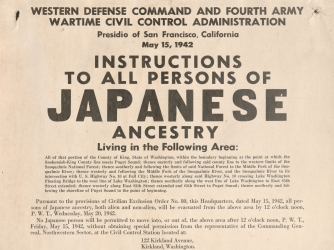
Fact: 1942, 110,000 to 120,000 people of Japanese Ancestry were put into concentration camps. 62% were US citizens. The people were forced to sell their property and put into camps.
Fact: Holocaust. 1941-1945, 6 million Jews and 5 million non-Jews (communists, gays, political opposition) were murdered. So, 11 million people were exterminated in 5 years.
Fact: 2017, President Trump ordered an immigration ban based on country of origin and religion.
Fact: 2017, Steve Bannon is President Trump's Chief Strategist.
Fact: 2017, Bannon said there's going to be a war in the South China Sea with China in the next 5 to 10 years.
Fact: 2016, Bannon said there were too many Asian tech CEOs in Silicon Valley.
Fact: 2010, There's 3.8 million people of Chinese descent in USA.

Opinion: If there's a war with China, they can round up 3.8 million Chinese-Americans and put them in internment camps. It is not unimaginable. When the Jews were being put into freight cars, more than a few thought they were just rounding up "bad" elements initially, but why would they round up doctors, scientists, lawyers, politicians, business men, who contribute to society? It was unimaginable. Well, the excuse is terrorism. The result might be new internment camps.


Opinion: Why is the immigration ban important? (yes, there's arguments about what it's called, but the immigration ban is what media calls it.) For me it's a litmus test to see if a stronger Executive Order can be signed that would allow rounding up any possible terrorists. If this immigration ban succeeds, then a stronger Executive Order can be signed that will repeat Executive Order 9066, but for Chinese Americans. And from our experience with the Japanese internment camps, citizenship does not exclude you from being taken to an internment camp.

Opinion: "3.8 million people are a lot of people, it'll be impossible to round up that many people." During WW2, the Germans and Axis powers rounded up and killed 11 million people in 5 years. Not impossible. With computers, social media, and modern transportation, it'll be even easier to make a list of names and put people into concentration camps.  Hey, to move so many people, the trains and buses will finally run on time.


Trumps Executive Order on Travel:

Bannon on too many Asians in Silicon Valley:

Bannon on war with China:

Sunday, January 15, 2017

GM Tricks for Running Dread and A Penny For My Thoughts

I find that these are two of the more interesting independent RPGs around. I love using Dread for survival horror games and running A Penny For My Thoughts as a quick ad hoc pickup game.

Both systems have their flaws and both do not use dice.  Dread uses a Jenga tower and A Penny for My Thoughts uses pennies.

Both are setting agnostic.


Tips for running Dread


1. Know how many pulls are required for your tower to go down.

My Jenga set typically takes 25 to 35 pulls before the tower goes down. One of my friends custom made an acrylic Jenga tower with led lights beneath the tower, unfortunately took 50 pulls before it would go down since the blocks were too smooth. Another friend of mine had a cheap knock off version with a rough finish and it took 15 to 20 pulls before the tower went down. Another painted his blocks and it made them too tacky. You get the idea, each tower has their own personality and quirks.

But why do you need to know how many pulls before your tower goes down? For pacing your game properly.

2. Continuously gauge the stability of the tower. Try to keep your game's plot in sync with the tower's stability.

As a GM, you must be cognizant that the stability of the Jenga tower and your game plot/tension need to be in sync. When the Jenga tower is stable, it should be a lull period in your game. When the Jenga tower is unstable, that is when the tension should be ratcheted up. When they are out of sync, your game will suffer for it.

I played in a game where an inexperienced Dread GM had us meet the Big Bad Climax right after the tower had gone down. Well, of course, we defeated the Big Bad easily since the tower was newly rebuilt. Anti-Climatic? Completely.

3. If the tower is too stable for a climatic scene, throw in pre-set encounters/scenes as filler to destabilize the tower.

Always have several filler scenes or encounters for the players that you can throw in that requires pulls from the tower. Then you can use them to destabilize the tower before a climatic scene.

Pre-set encounters can be monsters or a challenging event like a fire or flood. You can also allow the players to re-equip themselves and make them pull for equipment. An example would be a supply locker underwater that requires pulls to retrieve equipment.

4. When the tower goes down, make the death interesting.

If the character dies during a climatic scene, then describing the character death would be easy, but if during a lull period, when the tower is extremely stable and the tower unexpectedly goes down, having the character die from a paper cut is a bit lame, unless you're going for humor. So, when there's a character death during a lull period, come up with something interesting. For example in the underwater supply locker, instead of just drowning, have something grab them and drag them under.

5. Have replacement characters for a convention game.

Don't tell the players there are replacement characters, but during a convention game, if a player dies early it would just suck to sit out the rest of the game. You can either delay the death til later or give the player a replacement character. The Dread questionnaire can be a bit long, so I'm more of a fan of quick character generation.

6. Plain vanilla Jenga is good, but sprinkles and hot fudge on top is great too.

I have a Throw 'n Go Jenga with colored blocks and a die which limits which blocks you can pull. Some people write numbers on the end of blocks and make people roll dice to determine which blocks can be touched. One of my friends painted his blocks with security clearance colors from Paranoia and the character's security clearance determines which blocks can be pulled. People have also written messages on blocks that can't be read until the block is pulled. Lots of cool things to hack your Jenga tower.

I've written and run two highly customized Dread games:
Dread of Winter Horrible Invitational
The Carnival Magic - A Haunted Cruise Ship (details on the hacks, but unfortunately this was before I had spoiler sections and fully detailed info on the builds of my games, I'll write a separate blog on how to recreate this game).


Tips for Running A Penny for My Thoughts


1. Agree upon a tone for the game.

If some players want a humorous game and others something serious, then it'll be a problem and unsatisfying for all the players. There are questionnaires online which set up a Cthulhu horror story, a secret agent adventure, or a murder mystery, those help in setting the tone of the game.

I like to pick a movie whose trailer has come out, but no one has seen the movie yet. That sets up the tone, the characters, the genre, and ideas for scenes and gets everyone on the same page. I've played our own version John Carter of Mars and Inception before the movies came out.

One great thing about Fiasco is that the tone is baked into the game.

2. Don't force the merging of story lines, let it happen organically.

The individual character story lines always seem to merge and collapse into a cohesive timeline by themselves. There's no reason to force it. I've played in several games where the odd-man-out wound up being the villain at the end of the game.

3. Keep two 2-minute hourglass sand timers handy.

Some people take too long. One way to rein them in is to tell them everyone is limited to two minutes of narration. When the sand runs out, their time is out. Why two timers? It takes a while to reset the sand timer, while one is running, reset the other one. You can use a digital timer, but I like seeing the sand running and having a visual indication as to how much time is left, and how much has been used.

4. I dislike the ritualistic phrasing and drop most of it.

I just feel like it's too cult-like. So, I drop most of the phrasing and keep only a few phrases:

  • "When I think of ___, I remember..."
  • "What did I do or say next?"
  • "Or was it?"

5. I use glass beads instead of pennies.

Used pennies are filthy. So, I use glass beads instead. You can get a bag of them from any dollar store. They're sold as decorations and for putting in a vase to help hold flower stems in place.

Wednesday, December 28, 2016

Morgan's Dead of Winter 2009 Excellent Adventures


I attended the first Dead of Winter in 2009, an invite only horror convention. It was held at the Brookdale Lodge in the Santa Cruz mountains. It was an epic event. The hotel was rundown, the weather was bad, the gaming was great. This convention happened before I started blogging about the convention games I played in. I started blogging about the games because at a certain Mini-Con, I played with a very terrible GM and I forgot his name and I wound up signing up for another game of his. So, this was a way for me to remember the good games and the bad games (and bad GMs).

I decided to write up the experience because one day, I'm going to forget...

Welcome Sign, I like how the NO is covered up
Exterior of Brookdale Lodge
Exterior of Gaming Cabin to the right of the Lodge
Brook Room, with real brook
Dirty Chandelier
Bar facing Brook Room, note missing panes in stained glass
Interior from Brook Room to Cabin
Stairs from cabin to Brook Room
Giant Fireplace in Cabin
Exterior of Rooms

The Brookdale is in Santa Cruz and after several hours of driving through winding mountain roads during a storm, Shannon M. and I arrived. We had booked one of the "improved" rooms. The price was some outrageous $107/night. The room wasn't up to code. The mattresses were saggy, wall plugs didn't work, electrical plates were missing, lamps in the room didn't work, the toilet handle didn't flush, and the bathroom window was permanently painted open with no bug screen to keep the bugs out and it let the cold air in.

In the morning, I took a tour of the grounds. Crows feasted on overflowing garbage from a dumpster, an adjoining building had burned down. The Brook Room was still beautiful (with a brook running through the middle of the room), but rundown and deathly cold. Dust covered the stained glass chandeliers and the facing bar area had stained glass with missing panes of glass. Rain entered through the holes and the carpets were wet and soggy. Buckets were on the floor catching any rainwater that dripped from the ceiling.

Dumpster, my presence scared the crows away
Burned Down Rooms
Mermaid Room (picture I found on the internet)

Portions of the building were off limits and sealed off, but at night Ralph W. and I took a flashlight tour. In the off limits area, past two sheets of plastic, hung up as a barrier, was the mermaid room. A glass window looked into an algae infested swimming pool. The glass was dirty and moisture streamed down its face. Clumsily drawn murals of a man in a diving suit and Humphrey Bogart decorated the walls. There's supposed to be an entrance to the Gangster Tunnels, but bricked up and hidden inside a cabinet. Something like a playhouse was to the side of the Mermaid room and we went up the creaky rotten stairs, afraid that the floor would collapse beneath us, we left quickly.

The only thing still open was the full bar where pictures of famous people decorated the walls. President Herbert Hoover, movie stars like Marilyn Monroe, and gangsters like Al Capone used to frequent the Brookdale Lodge. Across the hall from the bar was the public restroom; one of the urinals was missing, there's just some plumbing sticking out of the wall and missing tile, but no urinal. Next to it, was a functioning urinal. I think in one of the stalls, the toilet was missing or disconnected and on it's side.

During our lunch break, sandwiches were provided in the bar area (not the full bar) that overlooked the Brook Room. Buckets captured water dripping down from the ceiling and water blown in through the missing panes of the stained glass window. The carpet was squishy.
Tree Trunk in Hallway to Cabin

To get to the cabin, you have to traverse some stairs and in the hallway, there's a tree trunk growing through part of the building.

The cabin has a "cold" spot and if you sit over it, it's definitely chilly, much more chilly than the unheated cabin. We started a fire in the giant fireplace, something out of Orson Well's Citizen Kane (it's actually a bit smaller, but you get my drift), but someone forgot to open up the flue and smoked out the cabin. That evening, the power went out. When we returned from dinner for our evening session, we wound up playing by candle light.

The Brookdale Lodge has several ghost stories associated with it. I eventually constructed a Dread game using our experiences and the Lodge's history as a setting. Link to game here. I was going to run it at the Brookdale, but it had been shut down by the fire department just that year and DoW was moved to the Oakland Airport Hilton instead.

I think only Badger experienced some ghostly apparition. Ask Badger about the visitor in his room.


I played in great games run by great GMs.  It's been so many years since then that I'm not going to bother about creating a spoiler section.  Assume minor spoilers below.

Saturday, Dec 12 10am-4pm
Title: Silent Night
GM: Gil Trevizo
This game was based on the movie: Bad Santa. I got to play Billy Bob Thornton and Shannon got to play Bernie Mac. Lots of high jinks ensued. In addition to trying to rip off the mall, there were zombies, penguins, doberman pinschers, Delta Green, disintegrations, sex with animals, and STDs.

Saturday Dec 12, 6pm - 1am
Title: Partners
GM: Badger McIness
I got to be a cop that was a serial killer.  I only killed lowlifes and prostitutes. We investigated a construction site and the other PCs decided to kill my character instead of the alien infected PC -- go figure. I actually got out of the construction site first, disabled their vehicle, and fled back to my townhouse to get some stuff (serial killer victim trophies) before leaving town. They actually called a cab, hunted me down, and shot me to death as I clutched the trophies to my chest. And the alien got away.

Sunday, Dec 13 10:30am - 4:30pm
Title: Communicable
GM: Kristin Hayworth
My introduction the Dread. OMG. Kristin thought the game was a disaster (her words, years later), but it was the most amazing game ever. The first mistake she made was to announce before the game started that there are no lines in this game, that this is a horror game and anything goes. In this game was Mike M, Matt G, Matt A, Matt D, Shannon M, and Morgan H. (I think Mike G might have been in the game too, but I'm not sure.) Well for those who don't know, when you get Mike M and Matt G in the same game, the combination is a bit explosive, um, nuclear. So, during character creation, Mike M rolls 1d6 and says his character's had 4 abortions and asked how many I've had. Then I pick up a 1d20 and roll a 12. On our character sheets, we write down various character backgrounds. When I handed mine in, Kristin crossed a line out on my character sheet and shouted, "NO!"  So much for no lines cannot be crossed. Then of course everyone wanted to know what was on my character sheet. I wrote down that I have so many abortions because my boyfriend liked to make me pregnant and collect the aborted fetuses in jars.

Matt D accidentally kicked the table early in the game, knocking down the Jenga tower, and Kristin let him live until the alien burst out from his body.

At one point, one PC repeatedly slammed a car door into another to make her spontaneously abort.

Another time a PC put mattresses to block a doorway to keep alien infected humans out and also leaving other PCs stuck outside.

We had to choose between running over a little girl in the middle of the street or crashing our car. We would have run the girl over except Kristin added that the girl would cure cancer in the future.

At one point, if we reveal a dark deep secret, we would get a bennie, a small skull which you can turn in instead of pulling from the Jenga tower. I think we were, as a group, watching aliens crawl out of the ground and the Jenga tower was very unstable, so that was when I decided to tell everyone that my character had AIDS. There was deep silence as all the PCs did the relationship math and realized they all had been exposed to AIDS.

In this game, we were the most horrible people and we all deserved to die. I think Matt A and Matt G made it out alive.

Sunday, Dec 13 6pm - 1am
Title: Northwest Passage
GM: Matt Steele
Up in Alaska, there's coldness and darkness, and strange things that Eskimos are afraid to talk about. Very strange things started happening like dinosaurs rampaging in the snow, so we holed up at a ranger station. I think my character was the town's dog catcher. At the end, some PCs ignited a big tank of propane and I jumped to cover Matt G's character (or maybe Mike M's? I don't remember now. See? My memory is going.) and saved him from the explosion. My character was a big guy and was able to protect him from the blast, but alas, my dog catcher died.